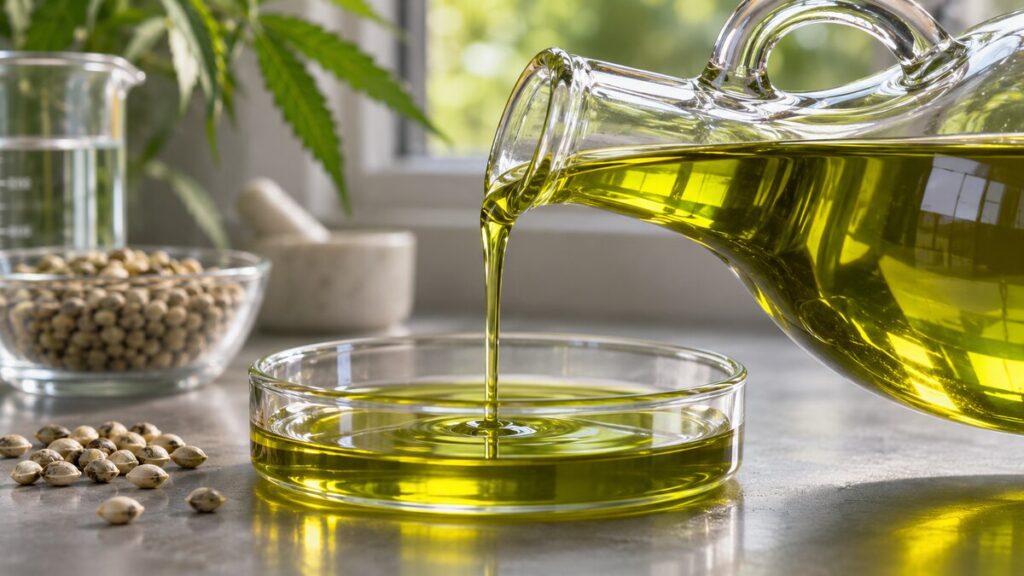
Two salad dressings can contain almost the same proportion of linoleic acid and quite different amounts of another essential fat, alpha-linolenic acid. The names differ by only a few letters. On a laboratory report the difference is easier to spot. One line reads 18:2 and the other 18:3. The numbers tell you something precise about what is on the plate. To discover what happens after lunch takes an entirely different experiment.
The small print on a fat molecule
The first number counts carbon atoms in the fatty acid chain. The second counts double bonds. A further designation, such as n-3 or n-6, tells chemists where the first double bond lies when they count from the end known as the omega end. Linoleic acid belongs to the omega-6 family. Alpha-linolenic acid, often shortened to ALA, belongs to the omega-3 family. Hempseed oil supplies both.
A useful worked example comes from the composition table in a controlled feeding study. Of the fatty acids measured in the hempseed oil, 55.7 percent were linoleic acid and 18.2 percent were ALA. In the soybean oil used for comparison, the corresponding figures were 53 and 6.89 percent. The larger distinction between these particular oils was on the ALA line. That detail would disappear behind a label that described both simply as rich in polyunsaturated fat.
What belongs in the denominator?
Those percentages describe the fatty acids measured in the oil. They cannot be read as percentages of the weight of an entire salad, a whole hemp seed or a day’s diet. Whole seeds contain protein and other material that an oil analysis leaves out. A review of hempseed composition also documents differences among samples. The numbers from one bottle make a good example without becoming universal specifications for every bottle.
A ratio drops another piece of information. A small serving and a large serving from the same bottle have the same ratio of omega-6 to omega-3. They supply different amounts of both. Anyone trying to relate a published ratio to a meal needs to know which food the oil replaced, how much went into the dressing and how much dressing actually made it onto the fork.
Following the oil into the blood
Humans obtain ALA from food. The body can convert some of it to the longer-chain omega-3 fats EPA and DHA, but conversion is limited. This is why identical amounts of total omega-3 in two foods need not provide identical amounts of EPA or DHA. The NIH guide to omega-3 fatty acids distinguishes the molecules and the dietary sources that supply them.
The feeding study went beyond analyzing the two oils. During the hemp phase, participants consumed hulled seeds as well as oil. After four weeks the researchers found changes in the relative abundance of particular fatty acids in blood samples. That answers a useful biological question: a change in the foods supplied could be detected downstream. Because the intervention included two hemp foods, the study cannot assign every change specifically to the oil. Nor is a change in a blood fatty acid equivalent to evidence of fewer heart attacks years later.
What was in the other bottle?
An earlier human trial comparing hempseed and flaxseed oils illustrates the importance of the comparison. Replacing one seed oil with another asks a different question from adding oil to someone’s existing meals. The starting diets, duration and chosen outcomes help determine what change an experiment can detect. A comparison of hemp varieties begins even further upstream, with the composition of the seeds themselves.
A fatty acid profile earns its place in nutrition science by identifying a specific difference that can be followed. In the dressing experiment, it put two nearly identical names on separate lines and revealed a sizeable contrast in one of them. The more ambitious questions about health begin on the next page, where someone records who ate the dressing, what they ate instead during the comparison period and what actually changed.