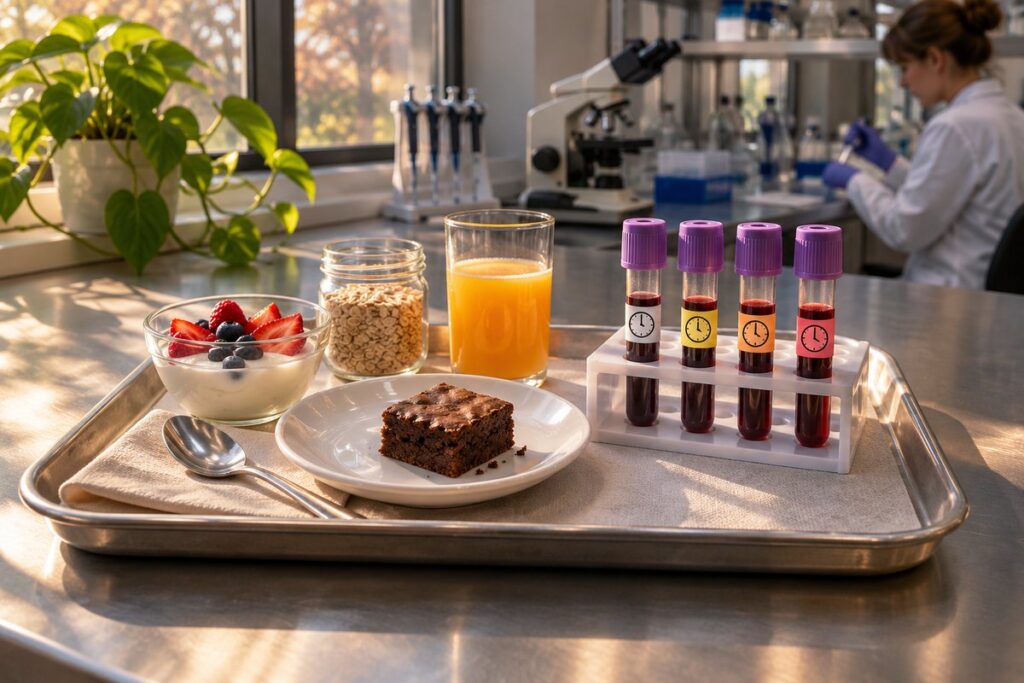
At 9:50 in the morning the volunteers ate a brownie. Ten minutes later came the inhaled part of the experiment. By 10:15 a blood sample was due. A schedule that precise might seem excessive for a study of the urge to snack, but it was central to the question. A brownie changes the body’s chemistry even when it contains no cannabis. And THC swallowed in food reaches the circulation on a different timetable from THC inhaled into the lungs.
In a controlled study of appetite-related hormones, twenty adults each attended four sessions. At different visits, active cannabis was supplied in the brownie, by smoking or by vaporization. One visit used placebo throughout. Participants ate a brownie even when the active exposure was inhaled. This gave the researchers a comparison that would have been missing if the smoking group had started its morning without food.
The first surprise came from placebo
Insulin concentrations rose during the placebo session. That makes biological sense after a brownie, and the investigators thought eating it was the likely explanation. The rise was smaller during the active cannabis conditions. Reading only the blood results from an active visit would have concealed the observation of most interest. Someone might see insulin rise and reasonably attribute it to the food, yet overlook the difference in the size of that rise across visits.
Another signal, known as GLP-1, was lower overall under cannabis than under placebo. GLP-1 is involved in the body’s response to eating, including the regulation of insulin and signals associated with fullness. A concentration measured in a blood tube records one component of that response. It tells us little about whether a particular person was looking forward to the next meal or how much food they would choose if offered a second helping.
Which ghrelin, and compared with what?
Ghrelin often goes by the shorthand name of the hunger hormone. In practice a laboratory must specify which form it has measured. The researchers assayed total ghrelin and also its acylated form, which carries a chemical modification relevant to activity at its familiar receptor. A review of ghrelin modification explains why the distinction matters. A change in the total amount need not imply an identical change in every form included in that total.
In this experiment total ghrelin during the oral cannabis session was higher than during the smoked and vaporized cannabis sessions. Notice the comparison: oral against inhaled. Turning that finding into a claim that every active condition raised ghrelin above placebo would change the result. Nor does ranking those three session averages tell us which route makes a person eat the most.
A time stamp belongs on every tube
The research team collected hormone samples before exposure, at 10:15, at 10:30 and at 11:30. A sample taken at 10:15 came twenty-five minutes after the brownie and only minutes after the inhalation period ended. Equal times on a wall clock are quite different points in the absorption of swallowed and inhaled THC. A small number of draws can catch a rapid rise, miss a peak between visits to the phlebotomist or stop before a later change has fully developed. An earlier pilot study measured appetite hormones in seven men living with HIV. Differences in the participants and sampling schedules matter when comparing its findings with this four-visit experiment.
A behavioral experiment can pick up the thread at exactly that point. In a separate study of cannabis and food intake, human participants had access to snacks and beverages after a controlled session, and the researchers measured what they consumed. That outcome has units an ordinary kitchen would recognize. It still does not tell us which circulating signal caused the person to reach for another snack.
The hormone study preserved the same morning routine while changing where the active cannabis entered it. Its strongest clues came from the comparisons made possible by that design: insulin against the brownie-only response, total ghrelin across routes, each sample against its clock. To connect those particular changes to eating would take a study that kept the blood draws and put food choices on the same timeline.